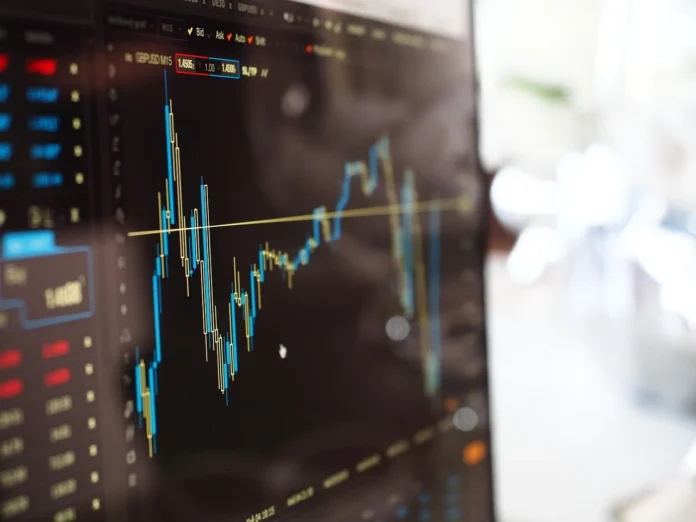
Automation is reshaping the rules of participating in this evolving trading environment in India. Long gone are those days when traders used to spend hours staring at the charts, waiting to have the right moment to dive into the market. Trades can be executed within milliseconds by algorithms, backed by logic, speed, and discipline.
In this blog, we look at developing a trading algorithm.
Step 1: Define a Tested Trading Strategy
The first step in designing a successful automated trading algorithm is having an idea that has been tested, measured, and proven. It may be a strategy that is trend-following, mean-reversion, breakout-based, or event-driven, but it needs historical data to support it. Start with the following 3 questions:
- Under what circumstances should the system buy or sell?
- What are the appropriate entry and exit points?
- Stop-losses and profit targets dynamics under different market conditions?
Step 2: Selection of an Appropriate Framework and Data
Any automated system has to be designed upon some systematic, structured, clean, real-time market data. Exchange data feeds guarantee accuracy, and coding is easily integrated with platforms such as Python, MetaTrader, or a broker’s API.
It involves backtesting or historical data testing. For example, for a Bank Nifty options trading algo, backtest past data of the index and individual stocks. This allows visualisation of trades on a historical basis to understand how your strategy would have performed in a bull and bear market, as well as a sideways market.
However, remember that over-optimisation might bring the system to the point where it’s too perfect in historical data and also too fragile to run in the future. This is not about establishing the best historical performance but rather stabilising the behaviour in a variety of cycles.
Step 3: Establish Risk and Position Management Rules
Even the smartest algorithm fails if it is not equipped with appropriate risk management. The program should know when to stop trading after a couple of consecutive losses or at what point to reduce positions according to volatility.
Predefined risk thresholds, such as not exceeding 1-2% capital exposure per trade, are used to hedge the portfolio in volatile periods.
It is possible to reduce drawdowns considerably by adding adaptive stop-losses that track profits or by constraining activities in volatile markets. Effective scripts would take into consideration transaction cost, slippage, and liquidity conditions.
Ultimately, risk controls are the key differentiator between an experimental and a truly reliable trading tool.
Step 4: Real World Pre-Deployment Testing
No matter how impressive the results of backtesting may look, they do not necessarily help in the same way in a live market. Begin with paper trading or a demo account as confirmation of real-time trading without capital risk. Test order-taking velocity, signal precision, slip action, and reaction to abrupt price surges.
Gather real-time feedback from your transactions before increasing your investments. This is important because it allows you to adjust your algorithm without being affected by market ups and downs.
Also read: The Benefits of Renting Lounge Furniture for Your Living Room
Step 5: Optimisation and Monitoring
Markets are evolving, and your algorithm must evolve with them. Monitoring the execution logs, win-loss ratios, and strategy measurements helps assess the performance against expectations.
Unexpected deviation usually indicates a problem in data quality or an evolution in the market. A responsible trader periodically checks their core logic.
Parameters may need to be re-tuned, not created afresh, when there is a change of volatility regimes or liquidity compression. Frequent upgrades make the system dynamic, but disciplined.
Step 6: Human Oversight and Automation
A successful automated system does not rule out human interaction; it makes it better. Traders should watch over the execution, especially in the case of macro events or unexpected mismatches of orders.
The use of human intuition still exists in the process of collaborative interpretation of structural changes or in the process of determining whether the logic of a system is in line with the market reality. Human judgment ought not to be replaced by automation but should complement it.
Conclusion
Creating a robust algorithm is more of logic and discipline rather than programming. Emphasise the clarity of rules, risk management, accuracy in performance, and responsiveness to different conditions.
The advantage is in creating a system that operates on defined logic without exhaustion or prejudice. Markets can never be predictable, but your response can be.

