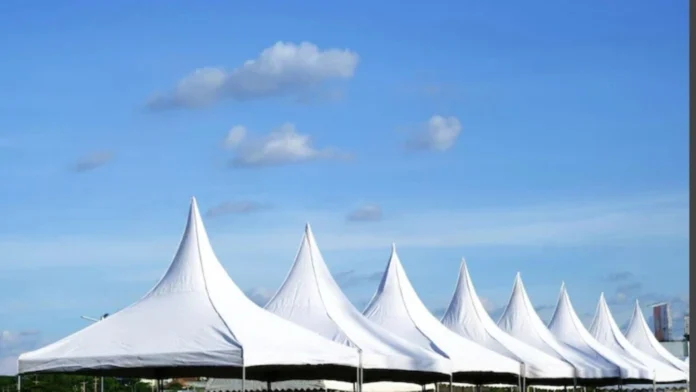
Tents in commercial canopies are extremely important in trade shows, brand activation, exhibitions, and outdoor promotional events. In addition to aesthetic attractiveness, correct assembly has a direct impact on safety, durability, and performance as a whole. Even a well-made custom pop-up canopy is likely to malfunction or be a liability if the best practice during its setup is not considered. Even on uneven surfaces, anchoring errors or minor mistakes can result in unnecessary damage, time wastage, or poor brand image. Learning the lifelong rules of thumb on canopy setups would lead to hassle-free setup and the appearance of professionalism in every event.
Table of Contents
7 Essential Do’s and Don’ts for Commercial Canopy Assembly
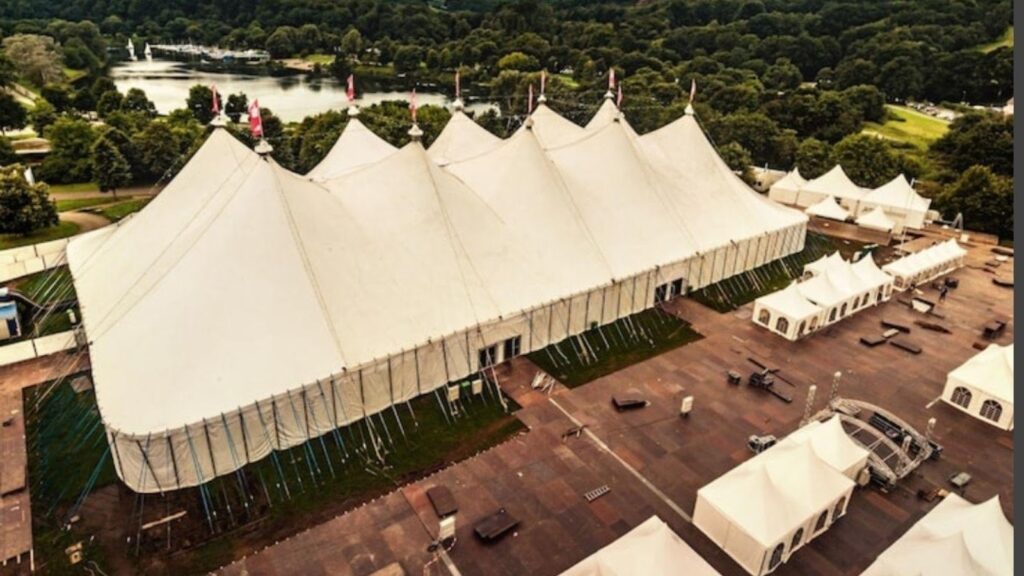
1. Do Use Proper Accessories with Custom Promotional Tents
Business systems, particularly custom promotional tents, are set up to cooperate with certain accessories that are useful in enhancing stability and functionality. Anchors, connectors, and weights recommended by the manufacturer are to be used to make sure that the frame works as planned. The lack of the correct accessories or even the replacement of incompatible parts enhances the instability. Specially designed accessories spread the weight in such a manner that they do not harm the structure as well as the people around.
2. Don’t Assemble the Tent on Uneven or Unstable Ground
Selection to the surface is a very important step. Balance and frame alignment can be broken by uneven pavement, sloping ground, or loose gravel. A tent set up in weak soil will easily move or lean, or fall as a result of a small breeze or human traffic. When selecting a flat surface that is not slanting, the distribution of the weight is enhanced, and the joints and connectors are also not under a lot of stress, which prolongs the life of the tent.
3. Do Fully Extend and Lock the Frame Before Securing the Canopy
Commercial canopy frames are designed so that they can be fixed in place on an extension. Semi-stretched frames compromise structural integrity and put stress on the user. A firm base is established by extending all the legs and locking systems to the maximum. This will avoid frame warping and provide the canopy fabric to fit properly with the right amount of tension and not hang.
4. Don’t Ignore Proper Weighting and Anchoring
The most prevalent problem with setups is the lack of weighting. Even the quiet conditions may cause some unforeseen gusts, which elevate or move a canopy. Sandbags, steel plates, or water weights, depending on the size of the tent, should be used to weigh each leg. Whenever feasible, it is an added security to anchor on grass or soft ground. Stable anchoring safeguards the structure as well as the individuals around.
5. Do Install the Canopy Fabric Evenly and Securely
Proper installation of the fabrics enhances the performance as well as the appearance. Laying the canopy, it should be centered on the frame, and the corners should be aligned and afterwards fixed. Misaligned placement of fabric creates areas of tension, which can cause tearing or damage to the seam. Balancing the canopy also enhances water runoff and wind resistance, which will help ensure a clean, professional appearance during the event.
6. Don’t Overlook Wind and Weather Considerations
Before and during setup, weather conditions must be taken into consideration. Sidewalls raise the wind resistance, and they ought to be fitted selectively depending on circumstances. Where ventilation is available, it helps to reduce the pressure underneath the canopy. Weather variables are usually ignored, resulting in a frame strain or instability. Keeping an eye on predictions and making changes enables the elimination of unnecessary failures.
7. Do Perform Ongoing Safety Checks During the Event
The setup does not cease as soon as the tent is erected. Periodic inspections will be made in order to ensure that weights are secure, fabric is tight, and connectors are locked. Foot traffic, moving ground, or weather changes will, over time, loosen components. Delegation of the administrative duties of inspections during the event is beneficial in pinpointing and rectifying early in the course of action to keep safety and presentation standards intact.
End Point
The performance of commercial canopies relies on how well they have been set up as much as the quality of the build. Businesses save money by doing what works and preventing what can go wrong, like using weights improperly, uneven surfaces, or hastily assembled work, etc., by doing what is right and avoiding what is wrong. In the use of custom promotional tents or custom pop-ups, which are versatile, strict setup habits are the measures that guarantee safety, longevity, and uniform brand impressions at all events.

