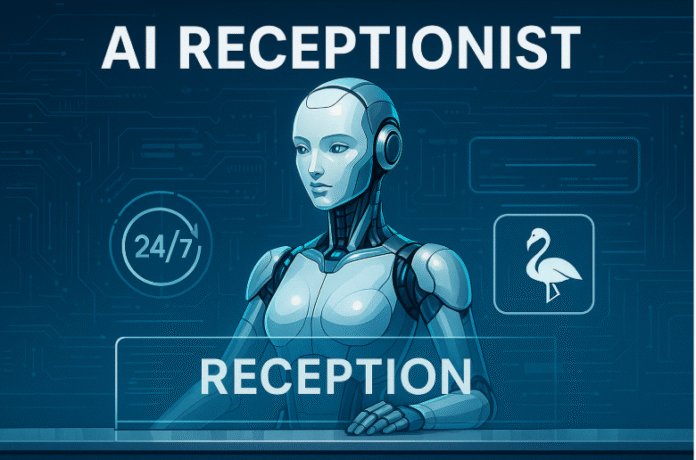
In today’s fast-paced business world, customer expectations are higher than ever. Clients no longer want to wait for business hours to get their questions answered, schedule appointments, or resolve issues. This demand for instant gratification, coupled with the rising costs of human labor, has led many businesses to explore innovative solutions. One such powerful innovation making waves across various industries is the AI receptionist.
Imagine a tireless, always-on employee who never takes a break, never calls in sick, and consistently provides accurate, friendly service. This isn’t a futuristic fantasy; it’s the reality offered by advanced AI-powered virtual assistants. But how exactly does this sophisticated technology work to provide seamless, round-the-clock support? Let’s delve into the mechanics behind how a virtual assistant operates 24/7, transforming customer service and operational efficiency.
The Foundation: Natural Language Processing (NLP) and Machine Learning (ML)
At the core of every effective AI receptionist lies sophisticated Natural Language Processing (NLP) and Machine Learning (ML) algorithms. These technologies are what enable the virtual assistant to understand, interpret, and respond to human language in a meaningful way.
- Natural Language Processing (NLP): This is the branch of AI that gives computers the ability to understand text and spoken words in much the same way human beings can. When a customer interacts with the AI, whether through text chat, email, or voice, NLP breaks down the input. It identifies intent, extracts key information, and recognizes entities like names, dates, and account numbers. For example, if a customer says, “I need to reschedule my appointment for Tuesday at 3 PM,” NLP understands that the intent is to reschedule, and the key information includes a specific date and time.
- Machine Learning (ML): ML models are continuously trained on vast datasets of conversations, industry-specific terminology, and customer queries. This training allows the AI receptionist to learn patterns, improve its accuracy over time, and adapt to new situations. The more interactions it handles, the smarter and more efficient it becomes. This continuous learning loop is crucial for the AI’s ability to handle a wide range of inquiries and provide increasingly personalized responses.
Operational Mechanics: How the 24/7 Cycle Works
The ability of an AI receptionist to operate continuously is a testament to its automated, algorithmic nature. Unlike human staff, AI doesn’t require sleep, breaks, or shift changes.
1. Constant Availability and Omnichannel Presence
The most obvious benefit of an AI receptionist is its perpetual availability. Whether it’s 3 PM on a Tuesday or 3 AM on a Sunday, the virtual assistant is online and ready to assist. This ensures that no customer inquiry goes unanswered, reducing customer frustration and potentially capturing leads that might otherwise be lost during off-hours.
Furthermore, an advanced AI receptionist can integrate across multiple communication channels, including:
- Website Chatbots: Providing instant answers to common questions, guiding users through website navigation, and capturing lead information.
- Voice Assistants (IVR Systems): Handling incoming calls, routing them appropriately, answering FAQs, and even completing transactions over the phone.
- Email Response Systems: Automatically replying to emails with relevant information, acknowledging receipt, or escalating complex queries to human agents.
- SMS/Text Messaging: Engaging with customers via text for reminders, confirmations, or quick information retrieval.
This omnichannel presence ensures a consistent customer experience regardless of how they choose to interact.
2. Intelligent Routing and Escalation
While an AI receptionist can handle a significant percentage of routine inquiries, it’s not designed to replace human interaction entirely. Instead, it acts as a powerful first line of defense. When an inquiry falls outside its programmed knowledge base or requires complex problem-solving, the AI intelligently routes the customer to the appropriate human agent or department.
This escalation process is seamless. The AI can collect all necessary information from the customer beforehand, providing the human agent with a comprehensive context of the interaction. This reduces the time human agents spend on repetitive questions and allows them to focus on more complex, high-value tasks. Studies show that businesses utilizing AI for initial customer contact can see a significant reduction in call wait times and an increase in customer satisfaction.
3. Data Collection and Analytics
Every interaction an AI receptionist has is a valuable data point. This data is rigorously collected and analyzed to provide businesses with critical insights into customer behavior, common pain points, and service gaps.
- Identifying FAQs: By tracking frequently asked questions, businesses can refine their knowledge base, improve their self-service options, and even identify areas where their website or product information might be unclear.
- Understanding Customer Sentiment: Advanced AI can analyze the tone and sentiment of customer interactions, flagging negative experiences for immediate follow-up or identifying areas where service improvements are needed.
- Optimizing Operations: The data can reveal peak inquiry times, common resolutions, and the efficiency of different communication channels, allowing businesses to optimize their staffing levels and resource allocation.
This continuous feedback loop ensures that the AI receptionist, and by extension, the business’s customer service strategy, is constantly evolving and improving.
Actionable Insights for Businesses
Implementing an AI receptionist can seem daunting, but the benefits are clear. Here are some actionable tips for businesses considering or optimizing their virtual assistant:
- Start Small, Scale Up: Begin by automating responses to your most common FAQs. Once successful, gradually expand the AI’s capabilities to handle more complex tasks.
- Train with Real Data: The more relevant and diverse data you feed your AI, the better it will perform. Use historical customer interactions to train your models.
- Maintain Your Knowledge Base: An AI is only as good as the information it has access to. Regularly update your knowledge base with new products, services, and policies.
- Monitor and Iterate: Don’t set it and forget it. Continuously monitor your AI’s performance, identify areas for improvement, and make necessary adjustments to its programming and responses tech winks.
- Emphasize Seamless Handoffs: Ensure that when the AI needs to transfer a customer to a human agent, the transition is smooth, and all relevant information is passed along.
The Future of Customer Service, Now
The operation of an AI receptionist 24/7 is not merely about extending service hours; it’s about fundamentally transforming how businesses interact with their customers. It’s about providing instant, consistent, and intelligent support that frees up human resources for more complex and empathetic tasks. As AI technology continues to advance, we can expect these virtual assistants to become even more sophisticated, personalized, and integral to business success. Embracing this technology isn’t just about keeping up; it’s about leading the way in customer satisfaction and operational efficiency.
Author Bio:
The author is a seasoned content strategist with over a decade of experience crafting engaging and informative content for B2B and B2C audiences. With a strong focus on emerging technologies and their practical applications, they specialize in simplifying complex concepts and delivering actionable insights that empower businesses to thrive in the digital age. Their work helps connect innovative solutions with the needs of modern enterprises.

